


Introduction
Many people ask the question, “Does Minnesota have mountains?” The answer is both simple and interesting. Minnesota does not have massive mountain ranges like the Rocky Mountains or the Appalachian Mountains, but the state does contain elevated hills, rocky highlands, scenic bluffs, and small mountain-like formations that attract outdoor lovers throughout the year.
Minnesota is famous for its lakes, forests, rivers, and natural beauty. However, many visitors are surprised to discover that parts of the state include rugged terrain, steep cliffs, hiking trails, and impressive elevated landscapes. Northern Minnesota especially offers dramatic scenery that feels very different from the flat farmland many people associate with the Midwest.
Understanding Minnesota’s geography helps explain why the state has hills and elevated areas instead of towering mountains. Over thousands of years, glaciers shaped the region and created rolling landscapes, rocky ridges, and scenic valleys. Today, these natural features provide opportunities for hiking, camping, skiing, photography, and sightseeing.
This article explains everything you need to know about Minnesota’s mountain-like terrain, including the highest point in the state, famous hiking destinations, outdoor activities, and how Minnesota compares to states with true mountain ranges.
What Is Considered a Mountain?
Before answering whether Minnesota has mountains, it is important to understand what qualifies as a mountain.
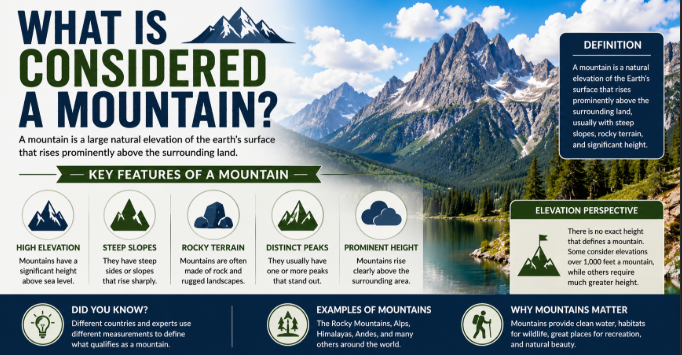
A mountain is generally defined as a large natural elevation of the earth’s surface rising prominently above the surrounding land. Mountains usually have:
- Steep slopes
- High elevation
- Rocky terrain
- Distinct peaks
- Significant height above nearby land
Different countries and organizations use different elevation measurements when defining mountains. Some experts consider elevations over 1,000 feet to be mountains, while others require much greater height.
Because definitions vary, some elevated areas in Minnesota may technically qualify as small mountains, while others are better described as hills or highlands.
Does Minnesota Have Real Mountains?
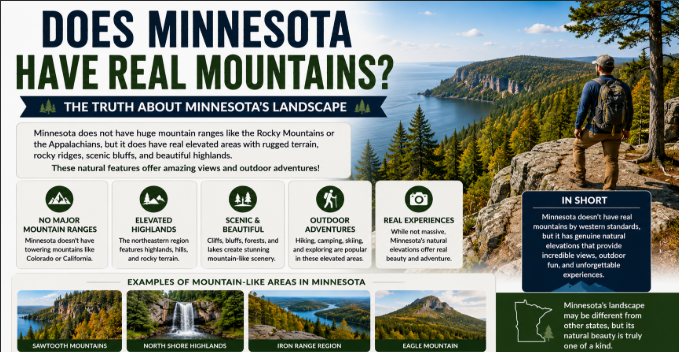
Minnesota does not have major mountain ranges like Colorado, Montana, or California. The state lacks extremely tall peaks and dramatic alpine environments.
However, Minnesota does have several elevated rocky areas that many people casually refer to as mountains.
The northeastern region near Lake Superior contains the state’s highest elevations and roughest terrain. This area includes rocky ridges, cliffs, forested hills, and scenic overlooks that provide a mountain-like experience.
Although these formations are much smaller than famous mountain ranges in western states, they still attract hikers and nature enthusiasts.
Why Minnesota Does Not Have Huge Mountains
The geological history of Minnesota explains why the state lacks towering mountains.
Millions of years ago, ancient mountain ranges likely existed in parts of the region. Over time, erosion gradually wore them down.
Later, glaciers covered much of Minnesota during the Ice Age. These massive sheets of ice reshaped the landscape by:
- Flattening terrain
- Carving valleys
- Creating lakes
- Forming rolling hills
- Depositing rock and soil
As a result, Minnesota developed its current landscape of forests, lakes, plains, and moderate elevations instead of giant mountain ranges.
The Highest Point in Minnesota
The highest natural point in Minnesota is Eagle Mountain.
Eagle Mountain Facts
- Elevation: 2,301 feet
- Location: Cook County, northeastern Minnesota
- Nearby Attraction: Boundary Waters Canoe Area Wilderness
Eagle Mountain is considered the tallest point in the state, although it is relatively small compared to mountains in western America.
Despite its modest elevation, Eagle Mountain offers beautiful hiking opportunities and scenic wilderness views.
Hiking Eagle Mountain
Eagle Mountain is a popular destination for hikers visiting northern Minnesota.
Trail Features
The hiking trail includes:
- Forest paths
- Rocky terrain
- Small streams
- Wildlife viewing opportunities
- Scenic viewpoints
The hike is moderately challenging and attracts outdoor enthusiasts seeking Minnesota’s highest peak.
Mountain-Like Areas in Minnesota
Although Minnesota lacks major mountain ranges, several areas provide rugged and elevated scenery.
Sawtooth Mountains
The Sawtooth Mountains are located near the North Shore of Lake Superior.
Despite the name, these are not true mountains by western American standards. However, they feature steep hills and rocky ridges that rise dramatically above the surrounding landscape.
Features of the Sawtooth Mountains
- Dense forests
- Scenic overlooks
- Hiking trails
- Waterfalls
- Lake Superior views
This region is one of the most beautiful outdoor destinations in Minnesota.
Iron Range Region
The Iron Range is known for mining history and rugged terrain.
Visitors can explore:
- Rocky hills
- Forested landscapes
- Scenic drives
- Outdoor recreation areas
The elevated terrain gives parts of the region a mountain-like appearance.
North Shore Highlands
The North Shore area along Lake Superior contains some of Minnesota’s steepest and most dramatic landscapes.
Popular attractions include:
- Cliffs
- Waterfalls
- Forest trails
- Rocky bluffs
- Elevated viewpoints
Many visitors describe this region as the closest thing Minnesota has to mountains.
Best Hiking Areas in Minnesota
Minnesota is a paradise for hikers even without giant mountains.
Tettegouche State Park
This park offers:
- Rocky cliffs
- Waterfalls
- Lake views
- Forest trails
It is one of the state’s top outdoor destinations.
Gooseberry Falls State Park
Known for beautiful waterfalls and scenic hiking trails, this park attracts thousands of visitors annually.
Superior Hiking Trail
The Superior Hiking Trail stretches for hundreds of miles along the North Shore.
The trail passes through:
- Forests
- River valleys
- Rocky ridges
- Elevated viewpoints
It provides some of the best hiking experiences in the Midwest.
Boundary Waters Canoe Area Wilderness
This wilderness area is famous for lakes and canoeing, but it also contains rugged terrain and hiking opportunities.
Nature lovers visit for:
- Camping
- Wildlife viewing
- Fishing
- Adventure travel
Outdoor Activities in Minnesota’s Highlands
Even without towering mountains, Minnesota offers many outdoor adventures.
Hiking
The state has thousands of miles of hiking trails through forests and elevated terrain.
Camping
Northern Minnesota contains beautiful campgrounds surrounded by nature.
Rock Climbing
Certain rocky cliffs near Lake Superior attract climbers.
Mountain Biking
Several trails provide challenging biking routes through rugged terrain.
Winter Sports
During winter, elevated areas support:
- Skiing
- Snowboarding
- Snowshoeing
- Snowmobiling
Scenic Drives
Minnesota’s North Shore Scenic Drive offers incredible views of Lake Superior and surrounding hills.
Comparing Minnesota to Mountain States
Minnesota’s landscape differs greatly from famous mountain states.
Colorado
Colorado contains peaks over 14,000 feet tall.
Montana
Montana features massive mountain ranges and alpine environments.
California
California includes the Sierra Nevada Mountains and towering peaks.
Minnesota
Minnesota’s highest point reaches only 2,301 feet, making it far less mountainous.
However, Minnesota still offers natural beauty and outdoor recreation opportunities.
Wildlife in Minnesota’s Elevated Regions
Northern Minnesota supports diverse wildlife populations.
Visitors may encounter:
- Deer
- Black bears
- Wolves
- Eagles
- Moose
- Foxes
The forests and wilderness areas create excellent habitats for animals.
Waterfalls and Cliffs in Minnesota
Many people associate mountains with waterfalls and rocky scenery.
Minnesota has many beautiful waterfalls, especially near Lake Superior.
Popular Waterfalls
- Gooseberry Falls
- High Falls
- Cascade Falls
- Devil’s Kettle Falls
These waterfalls add to the mountain-like atmosphere of northeastern Minnesota.
Minnesota’s Forests and Natural Beauty
One reason visitors love Minnesota is its rich natural environment.
The state contains:
- Millions of trees
- Thousands of lakes
- Scenic rivers
- Protected wilderness
- Rocky coastlines
These landscapes create a peaceful outdoor experience even without giant mountains.
Best Time to Visit Minnesota’s Highlands
Different seasons provide different experiences.
Summer
Perfect for hiking, camping, and sightseeing.
Fall
Autumn colors make the forests especially beautiful.
Winter
Snow transforms northern Minnesota into a winter recreation destination.
Spring
Waterfalls become powerful due to melting snow and rainfall.
Are Minnesota Hills Difficult to Hike?
Most hiking areas in Minnesota are less challenging than major mountain climbs.
However, some trails include:
- Steep sections
- Rocky paths
- Uneven terrain
- Long-distance routes
Beginners can still enjoy many easy trails throughout the state.
Why Tourists Love Northern Minnesota
Many visitors are surprised by how scenic northern Minnesota feels.
Popular reasons include:
- Peaceful wilderness
- Beautiful forests
- Lake Superior views
- Clean air
- Quiet hiking trails
- Wildlife encounters
The region offers a relaxing alternative to crowded mountain tourism destinations.
Minnesota’s Geological History
Minnesota’s terrain developed over billions of years.
Ancient volcanic activity, erosion, and glaciers shaped the state’s landscape.
Rock formations in northeastern Minnesota are among the oldest exposed rocks in North America.
This geological history contributes to the region’s rugged scenery.
Common Misconceptions About Minnesota
Many people believe Minnesota is completely flat.
In reality, the state contains diverse terrain including:
- Hills
- Forests
- Wetlands
- Rocky ridges
- River valleys
While it lacks giant mountains, Minnesota’s landscape is more varied than many people expect.
Hidden Scenic Destinations
Several lesser-known areas offer beautiful elevated scenery.
Oberg Mountain
A popular hiking destination with scenic overlooks.
Palisade Head
A dramatic cliff overlooking Lake Superior.
Temperance River State Park
Known for rocky canyons and waterfalls.
Split Rock Lighthouse Area
Offers stunning views of cliffs and Lake Superior.
Benefits of Minnesota’s Landscape
Minnesota’s moderate terrain provides several advantages.
Easier Hiking
Trails are generally accessible for beginners.
Family-Friendly Outdoor Activities
Families can enjoy nature without extreme climbing conditions.
Less Crowded Parks
Minnesota’s outdoor areas are often quieter than major mountain destinations.
Beautiful Four-Season Scenery
Each season transforms the landscape in unique ways.
Challenges of Minnesota’s Outdoor Areas
Although beautiful, visitors should prepare properly.
Weather Changes
Northern Minnesota weather can change quickly.
Wildlife Awareness
Visitors should understand basic wildlife safety.
Trail Conditions
Rocky or muddy trails may become slippery.
Remote Wilderness Areas
Some regions have limited services or cell phone coverage.
Is Minnesota Worth Visiting for Nature Lovers?
Absolutely. Minnesota may not have giant mountains, but it offers exceptional outdoor experiences.
Nature lovers can enjoy:
- Scenic hiking
- Lakeside views
- Forest adventures
- Waterfalls
- Camping
- Wildlife observation
The peaceful atmosphere and natural beauty make Minnesota a favorite destination for outdoor enthusiasts.
Conclusion
So, does Minnesota have mountains? The answer depends on how you define mountains. Minnesota does not contain towering mountain ranges like the Rockies or Appalachians, but it does feature elevated hills, rocky ridges, cliffs, and scenic highlands that provide a mountain-like experience.
Northern Minnesota especially offers rugged landscapes, beautiful forests, waterfalls, and hiking opportunities that surprise many first-time visitors. Areas near Lake Superior, Eagle Mountain, and the North Shore showcase some of the state’s most impressive scenery.
While Minnesota’s peaks are relatively small compared to western states, the natural beauty, peaceful wilderness, and outdoor recreation opportunities make the state an excellent destination for hikers, campers, photographers, and adventure lovers.
Whether you are exploring forest trails, climbing rocky overlooks, or enjoying the breathtaking views along Lake Superior, Minnesota proves that you do not need massive mountains to experience incredible nature.
