

Introduction
Website speed plays a major role in user experience and search engine optimization. A slow-loading page can increase bounce rates and reduce visitor engagement. The Page Size Checker SpellMistake tool helps website owners analyze the size of their web pages and identify opportunities for optimization. Whether you manage a personal blog, business website, or online portfolio, understanding page size is essential for improving loading speed and performance. This guide explains what the tool does, why it matters, and how beginners and intermediate users can use it effectively.
What is Page Size Checker SpellMistake?
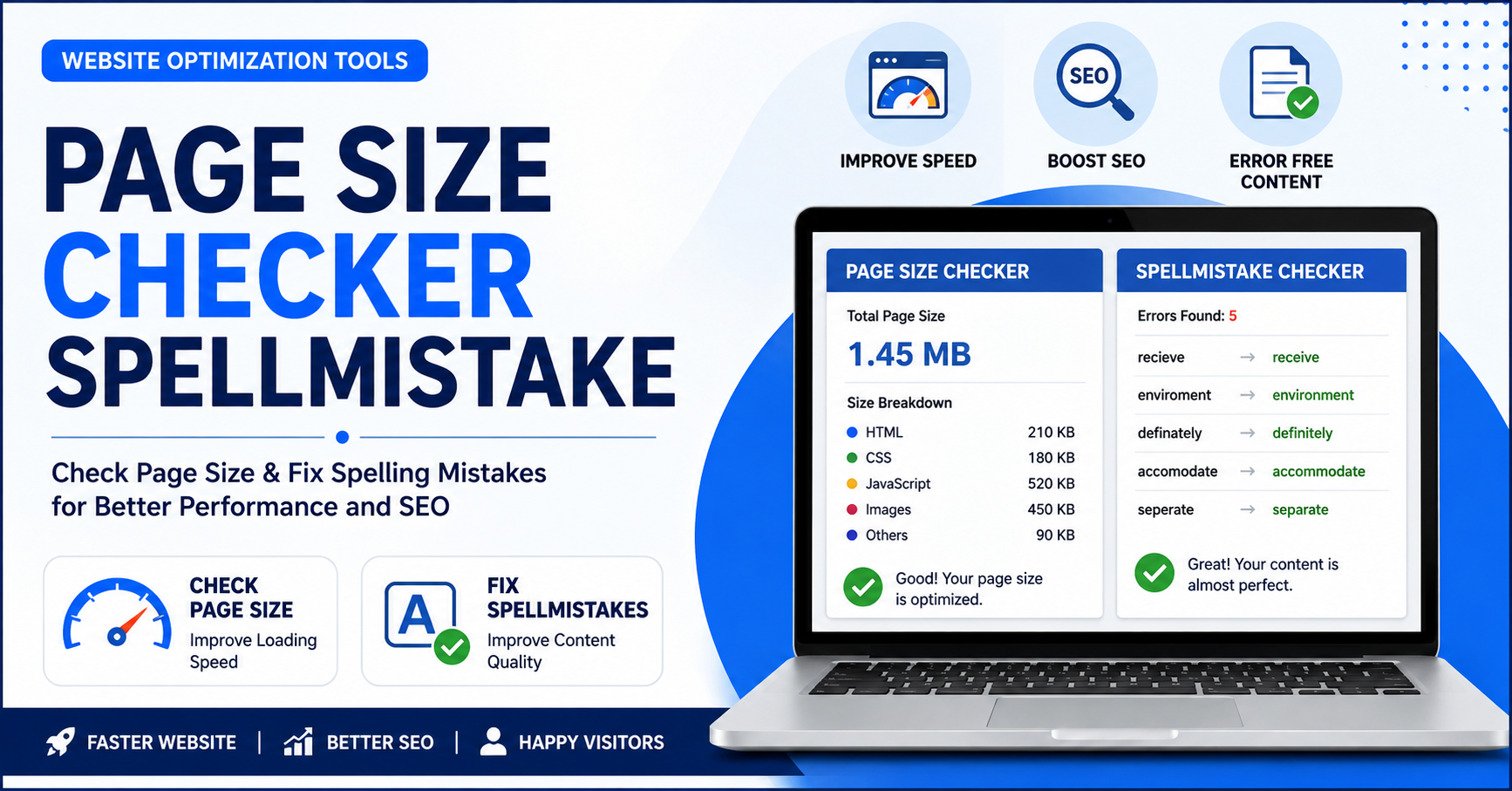
The Page Size Checker SpellMistake is a website optimization tool that measures the total size of a webpage, including HTML, CSS, JavaScript, images, and other resources. It helps users determine whether a page is too large and may affect loading speed.
For example, if a webpage contains several large images, the tool highlights the overall page size, allowing the website owner to compress images or remove unnecessary files. This makes performance optimization much easier.
Why is Page Size Checker SpellMistake Important?
Using the Page Size Checker SpellMistake helps improve website performance by identifying pages that load slowly because of excessive file sizes. Faster websites create a better browsing experience, encourage visitors to stay longer, and often perform better in search results.
Smaller page sizes also reduce bandwidth usage and improve loading times on mobile devices, making websites more accessible for users with slower internet connections.
Step-by-Step Guide
Step 1: Enter the Website URL
Open the tool and enter the webpage address you want to analyze.
Step 2: Run the Analysis
Start the scan to measure the total page size and loading resources.
Step 3: Review the Results
Check the reported page size and identify large elements such as images, scripts, or stylesheets.
Step 4: Optimize the Page
Compress images, remove unnecessary code, enable browser caching, and reduce large files before testing again.
Benefits
- Measures webpage size quickly.
- Helps improve website loading speed.
- Supports better user experience.
- Assists with SEO optimization.
- Identifies oversized page resources.
- Useful for beginners and professionals.
- Encourages regular website performance checks.
Risks or Disadvantages
- Reports page size but does not automatically fix problems.
- Some optimization tasks require technical knowledge.
- Results may vary depending on website updates.
- Large third-party resources can still affect performance.
Common Mistakes to Avoid
Many website owners only test their homepage while ignoring internal pages. Every important page should be checked regularly. Another mistake is uploading high-resolution images without compression. Avoid installing unnecessary plugins or scripts that increase page size. Finally, remember to test the website again after making changes to confirm that performance has improved.
FAQs
1. What does Page Size Checker SpellMistake measure?
It measures the total size of a webpage and its resources.
2. Does a smaller page size improve SEO?
A smaller page often loads faster, supporting better user experience and SEO.
3. Can beginners use this tool?
Yes. The tool is simple and easy to understand.
4. How often should I check page size?
It is recommended after major website updates or content changes.
Expert Tips
Use the Page Size Checker SpellMistake regularly instead of waiting until performance problems appear. Optimize images before uploading them, remove unused scripts, and minimize CSS and JavaScript files whenever possible. Monitor both desktop and mobile performance because visitor experiences may differ across devices. Combine page size optimization with quality content, proper website structure, and regular maintenance to achieve the best long-term SEO results.
Conclusion
The Page Size Checker SpellMistake is a valuable tool for improving website speed, user experience, and search engine performance. By measuring webpage size and identifying optimization opportunities, it helps website owners build faster and more efficient websites. Although reducing page size requires additional optimization steps, regular monitoring makes the process much easier. Make page size analysis part of your website maintenance routine, and you will create a faster, more reliable experience that benefits both visitors and search engines over time.
