

Introduction
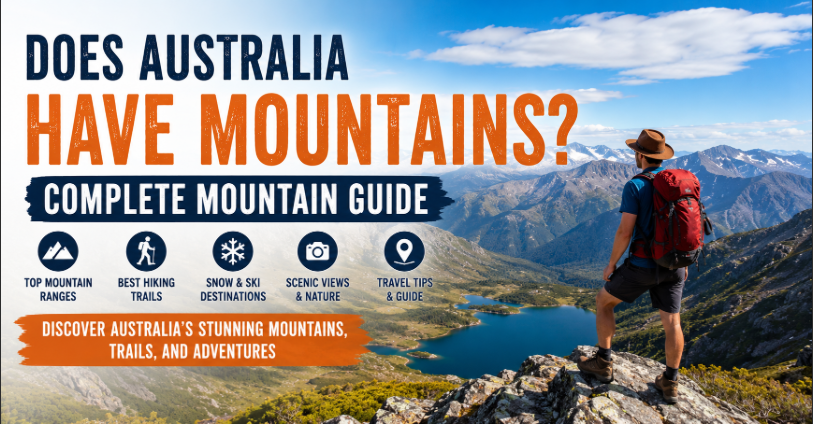
Many people wonder, does Australia have mountains? Since Australia is famous for beaches, deserts, wildlife, and coastal cities, some travelers assume the country is mostly flat. However, Australia actually has many mountains, mountain ranges, alpine regions, and elevated landscapes that attract hikers, campers, skiers, photographers, and adventure lovers from around the world.
Australia’s mountains may not be as tall as the Himalayas or the Rocky Mountains, but they still offer breathtaking scenery and exciting outdoor experiences. The country contains rugged cliffs, snowy alpine peaks, volcanic formations, forested highlands, and dramatic valleys spread across several states.
The most famous mountain system in Australia is the Great Dividing Range, which stretches more than 3,500 kilometers along the eastern part of the country. Australia is also home to Mount Kosciuszko, the highest mountain on the mainland. During winter, some Australian mountains even receive snowfall and become popular skiing destinations.
Australia’s mountains are important for tourism, wildlife, climate, and natural ecosystems. Visitors can enjoy hiking trails, scenic drives, waterfalls, camping adventures, and incredible panoramic views. Whether you are planning a trip or simply curious about Australian geography, understanding the country’s mountainous regions reveals a completely different side of Australia.
In this detailed guide, you will learn everything about Australia’s mountains, including famous mountain ranges, hiking destinations, snow regions, outdoor activities, wildlife, travel tips, and more.
Does Australia Have Mountains?
Yes, Australia absolutely has mountains. While the country is generally flatter than many other continents, it still contains several important mountain ranges and elevated regions.
Australia’s mountains are mainly located along the eastern coastline, southeastern alpine regions, Tasmania, and parts of the interior. These mountains vary in height, shape, climate, and geological history.
The country may not have extremely high peaks compared to Asia or South America, but Australia’s mountains remain beautiful and diverse. Some areas contain snow during winter, while others feature rocky cliffs, rainforests, and volcanic formations.
Australia’s mountainous landscapes support outdoor tourism and provide habitats for native wildlife. Many people are surprised to discover that Australia even has ski resorts and alpine villages.
The Great Dividing Range
The Great Dividing Range is the largest and most famous mountain system in Australia. It stretches through Queensland, New South Wales, and Victoria.
This enormous mountain range influences Australia’s climate, rivers, forests, and ecosystems. The range contains hills, plateaus, valleys, forests, and alpine regions.
Many major Australian cities are located near the Great Dividing Range, including Sydney, Brisbane, and Canberra.
Importance of the Great Dividing Range
- Controls rainfall patterns
- Supports forests and wildlife
- Creates scenic landscapes
- Provides hiking and camping opportunities
- Contains rivers and waterfalls
- Supports agriculture in nearby regions
What Is the Highest Mountain in Australia?
The highest mountain on mainland Australia is Mount Kosciuszko.
Mount Kosciuszko
Mount Kosciuszko stands approximately 2,228 meters above sea level and is located in New South Wales within Kosciuszko National Park.
The mountain is popular among hikers because the summit trail is relatively accessible compared to many other famous mountains worldwide.
Visitors enjoy:
- Scenic alpine views
- Wildflowers during summer
- Snow-covered landscapes in winter
- Hiking and photography
- Wildlife observation
Mount Kosciuszko is part of the Australian Alps, which contain some of the country’s most beautiful mountain scenery.
Australian Alps
The Australian Alps are among the most important mountainous regions in the country.
They extend through:
- New South Wales
- Victoria
- Australian Capital Territory
The Australian Alps contain:
- Snowy peaks
- Alpine forests
- Ski resorts
- Rivers and lakes
- Hiking trails
- National parks
During winter, the region becomes a major skiing destination.
Can You Ski in Australia?
Yes, Australia has skiing and snowboarding destinations.
Although Australia is known for warm weather, several alpine areas receive heavy snowfall during winter.
Popular Ski Resorts in Australia
Perisher
Perisher is one of the largest ski resorts in the Southern Hemisphere.
Thredbo
Thredbo offers skiing, snowboarding, mountain biking, and hiking.
Falls Creek
Falls Creek is popular for families and winter sports enthusiasts.
Mount Buller
Mount Buller is located near Melbourne and attracts many visitors during winter.
Famous Mountain Ranges in Australia
Australia contains several major mountain ranges.
Blue Mountains
The Blue Mountains are located west of Sydney and are famous for:
- Cliffs
- Waterfalls
- Forests
- Scenic viewpoints
- Hiking trails
The area gets its name from the blue haze created by eucalyptus trees.
Snowy Mountains
The Snowy Mountains contain Australia’s highest mainland peaks and major ski resorts.
Flinders Ranges
Located in South Australia, the Flinders Ranges feature dramatic desert mountains and ancient rock formations.
Grampians
The Grampians in Victoria are known for rugged cliffs, waterfalls, wildlife, and hiking trails.
Glass House Mountains
These volcanic peaks in Queensland are popular tourist attractions.
Why Australia’s Mountains Are Important
Australia’s mountains provide many environmental and economic benefits.
Tourism
Millions of tourists visit mountain regions every year for hiking, skiing, camping, and sightseeing.
Wildlife Habitats
Mountain forests support native animals including:
- Kangaroos
- Koalas
- Wombats
- Wallabies
- Birds
- Reptiles
Water Sources
Many rivers begin in mountain regions and provide water for cities and agriculture.
Climate Influence
Mountains affect rainfall patterns and local weather conditions.
Conservation
National parks protect forests, wildlife, and natural ecosystems.
Best Hiking Destinations in Australia
Australia offers incredible hiking opportunities.
Overland Track
Located in Tasmania, this trail passes through mountains, forests, and lakes.
Larapinta Trail
This desert mountain trail in the Northern Territory provides dramatic scenery.
Mount Kosciuszko Summit Walk
One of Australia’s most famous mountain hikes.
Blue Mountains Trails
The Blue Mountains contain numerous beginner-friendly and advanced hiking routes.
Grampians Peaks Trail
This trail offers scenic cliff views and wildlife encounters.
Wildlife Found in Australian Mountains
Australian mountain regions support unique wildlife.
Kangaroos and Wallabies
These animals are commonly seen in alpine and forest areas.
Wombats
Wombats live in mountainous forests and grasslands.
Koalas
Koalas inhabit eucalyptus forests near mountain regions.
Birds
Australia’s mountains contain colorful parrots, cockatoos, and birds of prey.
Reptiles
Lizards and snakes are found in warmer mountainous environments.
National Parks in Australia’s Mountains
Many mountain areas are protected within national parks.
Kosciuszko National Park
Home to Mount Kosciuszko and alpine scenery.
Blue Mountains National Park
Famous for cliffs, waterfalls, and forests.
Cradle Mountain-Lake St Clair National Park
Located in Tasmania with stunning mountain landscapes.
Grampians National Park
Known for rock formations and hiking trails.
Best Time to Visit Australia’s Mountains
Summer
Summer is excellent for hiking and camping.
Autumn
Autumn brings cooler temperatures and colorful scenery.
Winter
Winter is ideal for skiing and snow activities.
Spring
Spring features blooming flowers and pleasant hiking weather.
Do Australia’s Mountains Get Snow?
Yes, several Australian mountain regions receive snow during winter.
Snowfall mainly occurs in:
- Australian Alps
- Snowy Mountains
- Tasmania
- Victorian alpine regions
Snow season usually lasts from June to September.
Mountains in Tasmania
Tasmania contains some of Australia’s most rugged and beautiful mountains.
Cradle Mountain
Cradle Mountain is one of Tasmania’s most famous natural attractions.
Visitors enjoy:
- Hiking
- Wildlife spotting
- Photography
- Camping
Tasmania’s cooler climate supports dense forests and alpine scenery.
Are Australia’s Mountains Volcanic?
Some Australian mountains formed through volcanic activity.
Volcanic Regions Include:
- Glass House Mountains
- Mount Warning
- Volcanic plains in Victoria
These formations provide unique landscapes and geological importance.
Outdoor Activities in Australian Mountains
Hiking
Australia has trails for beginners and experienced hikers.
Camping
Mountain campgrounds allow visitors to experience nature closely.
Skiing
Winter resorts attract snow sports enthusiasts.
Rock Climbing
Cliffs and rocky formations provide climbing opportunities.
Photography
Mountain landscapes create incredible photography locations.
Wildlife Watching
Nature lovers enjoy observing native Australian animals.
Scenic Drives Through Australia’s Mountains
Great Alpine Road
One of Australia’s most scenic mountain drives.
Blue Mountains Drive
Features dramatic cliffs and forests.
Tasmania Wilderness Routes
Offer incredible mountain and lake scenery.
Hidden Mountain Gems in Australia
Mount Buffalo
Known for granite cliffs and alpine scenery.
Cathedral Ranges
Popular among hikers and climbers.
Barrington Tops
Features rainforests and mountain landscapes.
Bunya Mountains
Famous for forests and peaceful nature experiences.
Australia’s Mountains Compared to Other Countries
Australia’s mountains are generally smaller than those in Asia, Europe, or North America.
However, they still offer:
- Beautiful scenery
- Diverse ecosystems
- Excellent hiking
- Skiing opportunities
- Peaceful wilderness experiences
The country’s mountains are unique because they combine forests, wildlife, deserts, and coastal scenery.
Travel Tips for Visiting Australian Mountains
Bring Proper Gear
Weather conditions can change quickly in mountain areas.
Stay Hydrated
Australia’s climate can become hot and dry.
Respect Wildlife
Do not disturb native animals.
Follow Safety Guidelines
Stay on marked trails and prepare for changing conditions.
Book Early During Winter
Ski resorts become busy during snow season.
Benefits of Visiting Australian Mountains
- Beautiful natural scenery
- Excellent hiking opportunities
- Snow sports during winter
- Wildlife encounters
- Camping and outdoor recreation
- Photography locations
- Family-friendly adventures
- Peaceful travel experiences
Challenges of Australian Mountain Travel
- Remote areas may lack services
- Sudden weather changes
- Bushfire risks during dry seasons
- Some trails require physical fitness
- Winter roads can become icy
Australia’s Mountains and Tourism
Mountain tourism continues to grow in popularity.
Travelers increasingly seek:
- Eco-tourism
- Nature experiences
- Adventure travel
- Sustainable tourism
- Outdoor recreation
Australia’s mountains provide all these experiences while remaining less crowded than many international mountain destinations.
Final Thoughts
So, does Australia have mountains? The answer is definitely yes. Australia contains beautiful mountain ranges, alpine regions, volcanic formations, and rugged landscapes that attract millions of visitors every year.
From the Great Dividing Range and Mount Kosciuszko to the Blue Mountains and Tasmania’s wilderness, Australia offers diverse mountain experiences for travelers and outdoor enthusiasts.
Whether you enjoy hiking, skiing, wildlife photography, camping, or scenic drives, Australia’s mountains provide unforgettable adventures and stunning natural beauty.
Although Australia may not have the tallest mountains in the world, its landscapes remain unique, peaceful, and incredibly rewarding to explore.
