

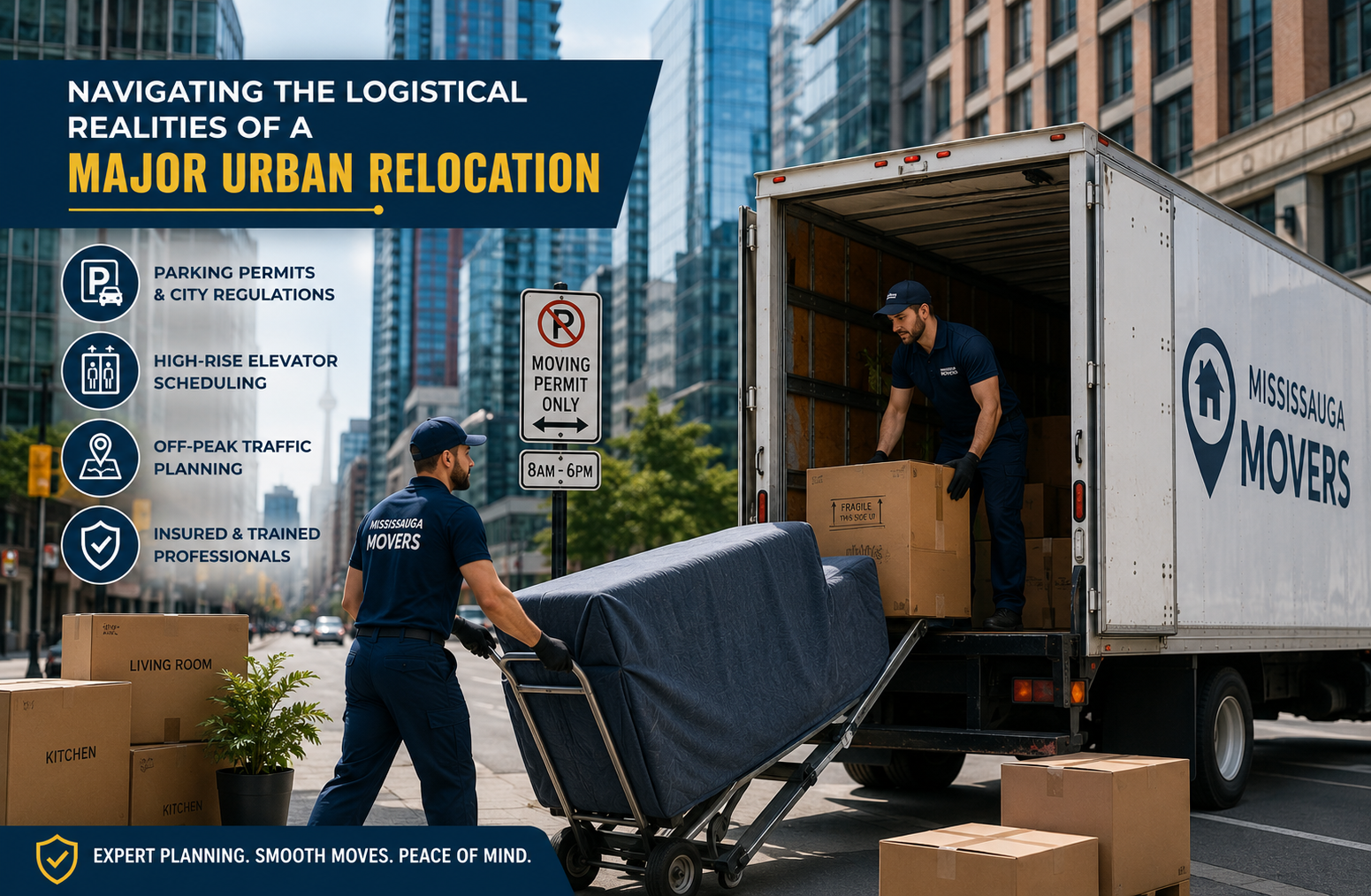
Moving to a new home or office within a major urban center is an exciting step that brings your life or business closer to thriving economic markets, cultural hubs, and vibrant communities. However, managing a major move through busy urban streets, high-density high-rise buildings, and strict local regulations introduces unique technical challenges that are rarely encountered during rural or suburban moves. From navigating tight traffic congestion to matching building elevator access schedules, an urban move demands careful preparation and logistical expertise to execute successfully.
To overcome these unique urban moving challenges and avoid costly property delays, partnering with a licensed, local relocation team is essential. Booking an experienced local moving agency like Mississauga Movers or an expert transportation provider ensures that your urban transition is handled with precision. Local moving specialists understand how to navigate low-clearance loading zones, manage parking permits, and operate efficiently within high-rise buildings, turning a complex urban move into a smooth, stress-free experience.
Executing an urban relocation efficiently requires a clear, step-by-step approach. Organizing your moving day timeline allows you to avoid unexpected city bottlenecks and protect your personal belongings.
The Unique Technical Challenges of Urban Relocations
Urban moving involves a variety of city restrictions and logistical barriers that require professional handling to navigate safely.
Navigating Parking Restrictions and Low-Clearance Loading Zones
Major urban streets feature strict parking regulations, narrow alleyways, and low-clearance loading zones that can easily block standard moving trucks. Parking a large commercial vehicle illegally block traffic can lead to expensive city fines and instant towing penalties. Local relocation crews know how to secure official city street parking permits early and choose the right truck sizes to access tight underground loading docks safely.
Matching Strict High-Rise Building Elevator Regulations
High-density high-rise apartment structures and commercial office towers maintain strict rules regarding moving logistics to protect building tenants. Property managers typically require residents to reserve building service elevators weeks in advance, limiting moving access to short, specific time blocks. If your moving crew operates slowly or arrives late, you can miss your elevator window, causing severe delays and extra building management fees.
Managing Logistical Efficiency in High-Traffic Neighborhoods
Transporting a large truck filled with fragile household items through heavy city traffic, construction zones, and tight intersections requires expert driving skills and strategic timing. Scheduling your moving truck’s journey during peak morning traffic can waste valuable hours on the road, increasing your labor costs and pushing your unloading window into the evening.
Key Strategies for an Efficient Urban Relocation
An efficient urban move relies on careful timing and meticulous preparation to avoid unexpected city bottlenecks and protect your timeline.
Scheduling Moving Times Around Off-Peak Traffic
The most successful urban moves are scheduled during off-peak hours or weekend mornings when city street traffic is light. This strategic timing allows your moving truck to travel safely between properties without getting stuck in traffic gridlock, keeping your project moving efficiently within your planned schedule.
Comprehensive Property Protection for Tight Spaces
Maneuvering large furniture pieces through narrow high-rise hallways, sharp corners, and low doorways requires extra care to prevent structural damage. Experienced moving technicians wrap your items in thick furniture pads and apply specialized guards to building doorframes and corners, ensuring your belongings slide through tight spaces safely without leaving scuffs.
Verifying Building Property Management Insurance Demands
Most high-rise commercial towers and premium residential buildings require moving companies to supply an official Certificate of Insurance (COI) before they are allowed onto the property. This document proves the moving agency holds enough liability coverage to protect the building’s infrastructure from accidental damage, a mandatory compliance step that professional moving companies handle early.
Long-Term Benefits of Choosing Local Urban Relocation Experts
Investing in a licensed, local moving crew delivers clear operational and financial benefits that support your city transition.
- Zero Unexpected City Parking Fines: Local crews handle all necessary city parking permits and neighborhood clearances early, ensuring a legal moving day process.
- Smooth High-Rise Property Clearance: Supplying required insurance documents and respecting elevator schedules ensures a smooth, stress-free property transfer.
- Protected Personal Possessions: Utilizing advanced packing methods and padded trucks shields your fragile items from road vibrations and tight corner scuffs.
Frequently Asked Questions
What is a Certificate of Insurance and why does my building require it?
A Certificate of Insurance is an official document proving your moving company holds active liability coverage to protect the building’s elevators, corridors, and doors from damage.
How do local moving crews handle buildings that do not have service elevators?
Experienced technicians utilize manual lifting teams, specialized straps, and systematic staging to carry items up stairwells safely and efficiently.
Can I reserve urban street parking for my moving truck on my own?
While some cities allow residents to apply for temporary parking signage, hiring a local moving company that manages city permits ensures full compliance with local laws.
What truck size is best for navigating tight urban alleyways?
Local moving agencies maintain a variety of truck sizes, often opting for specialized 16-foot or 20-foot clean box trucks to navigate tight city streets safely.
How should I pack my items to survive a long high-rise move?
Use heavy-duty boxes, seal all edges tightly with premium packing tape, and label each box with the specific room number to ensure fast unloading.
Conclusion
Executing a major urban relocation through experienced local moving specialists is a vital strategy to avoid city bottlenecks and ensure a smooth property transition. Trying to manage a complex high-rise or downtown move without professional assistance increases your risk of expensive traffic delays, building management fines, and accidental property damage. By trusting a licensed, fully insured local crew, you ensure that all city permits are secured, building rules are respected, and your belongings are moved safely through tight spaces. Ultimately, investing in professional urban relocation support saves you time and physical effort, allowing you to settle into your new city space with complete peace of mind.
